Sunday Forward — Italian American · Week 4
Hearty Beef Stew + Root Vegetables
Red wine braise · San Marzano tomatoes · six steps · worth every one
Dinner Make-Ahead Slow Braise One Pot Sunday Best
6–8
Servings
30 min
Active
3.5–4 hr
Total
Medium
Difficulty
Meat
🥩
Protein
Beef Chuck Roast
Cut into 1½-inch pieces; pat dry before searing
3–3½ lb
🫒
Sear
Olive Oil
For searing and sautéing
3–4 tbsp
🧂
Season
Salt & Black Pepper
Season beef generously before searing
to taste
Aromatics
🧅
Aromatic
Yellow Onions
Diced
2
🧁
Aromatic
Celery Stalks
Diced
3–4 stalks
🧄
Aromatic
Garlic
Minced
4–6 cloves
🍅
Paste
Tomato Paste
Cooked with the garlic until deep red and fragrant
3 tbsp
Liquids
🍷
Deglaze
Red Wine
A drinkable table wine — Chianti or Barbera works great here; reduced by half before adding the broth
1½ cups
🍲
Broth
No-Salt Chicken Broth + Beef Better Than Bouillon
Colin’s stew base: no-salt chicken broth fortified with beef-flavored Better Than Bouillon (about 1 teaspoon per cup) — richer than boxed beef stock, and you control every grain of salt
3 cups + 1 Tbsp
🧪
Body
Unflavored Gelatin
Stirred into the broth before it goes in the pot — Colin’s trick for a thicker, richer braising liquid. Three packets, not one — that’s what gives it the glossy, rich body. Easy to forget since it dissolves right in, but don’t skip it.
3 packets
🍅
Tomato
San Marzano Tomatoes
28 oz can, DOP if you can find them — crush by hand directly into the pot
1 can (28 oz)
Herbs
🍃
Herb
Bay Leaves
Remove before serving
2
🌿
Herb
Fresh Thyme
A few sprigs; strip leaves or add whole and remove with bay leaves
to taste
🌿
Herb
Fresh Rosemary
1–2 sprigs; remove before serving
to taste
Vegetables
🥔
Starch
Yukon Gold Potatoes
Peeled and cut into 1-inch pieces; hold their shape and stay buttery through the braise
1½ lb
🥕
Root Veg
Carrots
Peeled and cut into 1-inch pieces
4–6
🍄
Umami
Cremini or Button Mushrooms
Quartered; sautéed separately adds more browning flavor
8 oz
🟢
Finish
Frozen Green Peas
Stirred in at the very end — they just need to heat through
1–1½ cups
🌿
Garnish
Fresh Flat-Leaf Parsley
Chopped; added just before serving
handful
Method
0 of 6 steps complete — click a step to check it off
1Sear
Pat Dry, Season, Sear
Preheat the oven to 325°F. Pat the beef chunks completely dry with paper towels — moisture is the enemy of a good sear. Season generously with salt and pepper. Heat olive oil in a heavy Dutch oven over medium-high until shimmering. Working in batches so you never crowd the pan, sear the beef until deeply browned on all sides, 4–5 minutes per side. Transfer to a tray and set aside. Do not skip or rush this step.
2Fond
Build the Aromatic Base
Lower heat to medium. Add the onions and celery with a pinch of salt. Cook, scraping up the fond from the bottom of the pot as you go, until softened and lightly golden, 8–10 minutes. Add the garlic and tomato paste and cook, stirring, until the paste darkens to a deep brick red and smells fragrant, about 1–2 minutes. The paste caramelizing in the oil is building flavor you can’t add back later.
3Wine
Deglaze with Wine and Reduce
Pour in the red wine and scrape up any remaining fond from the bottom — every bit of that is flavor. Bring to a boil and let reduce by half, about 5 minutes. The alcohol cooks off; what remains is depth and acidity that balances the richness of the braise.
4Braise
Add Liquids, Return Beef, Oven
Stir all three gelatin packets into the broth until they dissolve, then add the broth and the San Marzano tomatoes to the pot, crushing the tomatoes by hand as you add them. Add the bay leaves, thyme, and rosemary. Return the seared beef and any accumulated juices from the tray — don’t leave those juices behind. Bring to a simmer, then cover tightly and transfer to the oven. Braise at 325°F for 2–2½ hours, until the meat is beginning to tenderize but not yet falling apart.
5Veg
Add Root Vegetables and Mushrooms
Remove from oven and add the potato chunks, carrots, and mushrooms. Cover and return to the oven for another hour, until the vegetables are completely fork-tender and the beef is falling apart in the broth. The mushrooms will have absorbed the braising liquid and turned deeply savory.
6Finish
Peas, Rest, and Serve
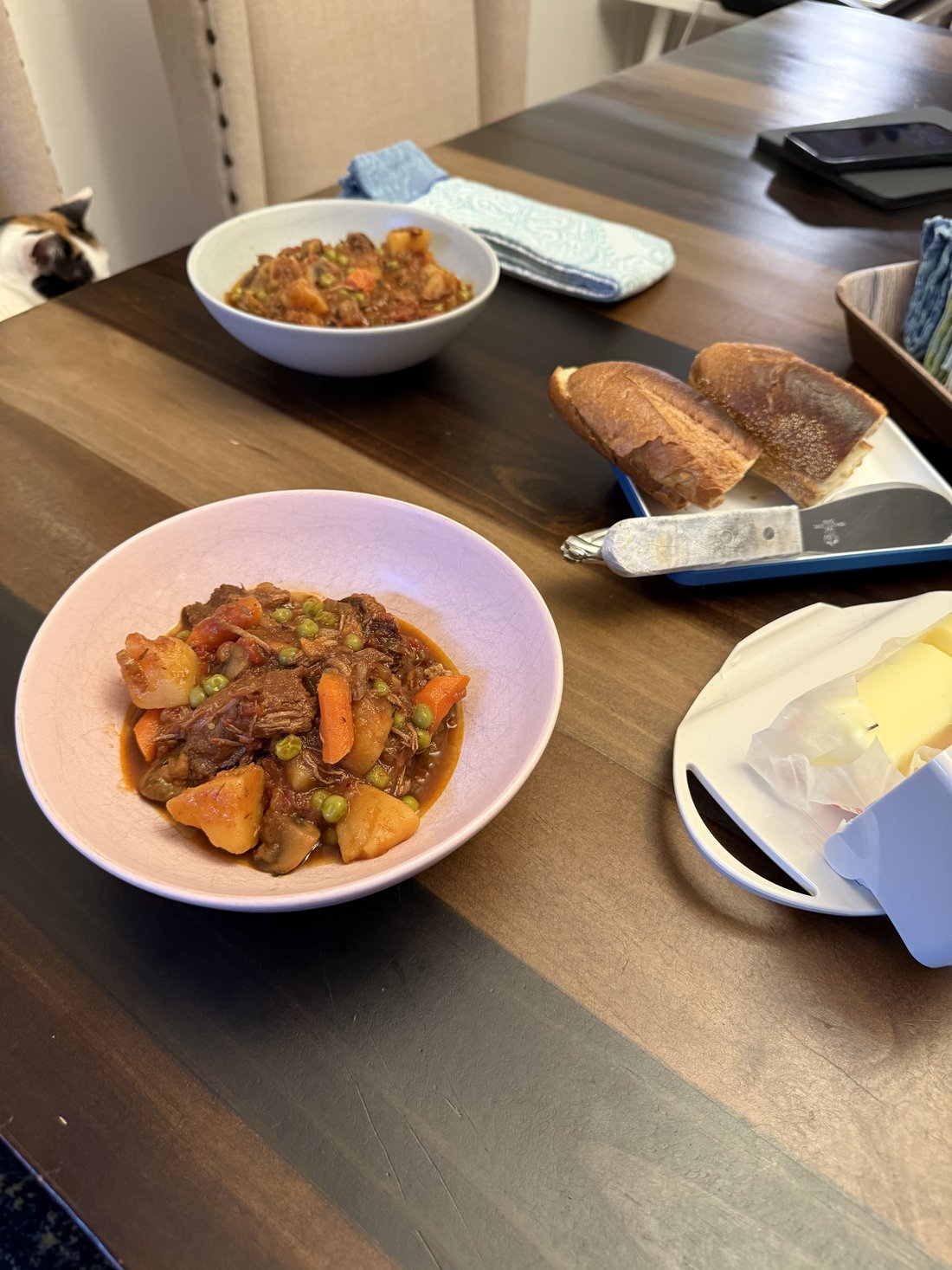
Remove from the oven. Fish out the bay leaves and herb sprigs. Stir in the frozen peas and let them warm through, about 2 minutes. Let the stew rest uncovered for 10–15 minutes before serving — it thickens as it sits. Taste and adjust salt and pepper. Serve in deep bowls with crusty bread and a scatter of fresh chopped parsley.
🔥
Dry Meat = Better Sear

Pat the beef completely dry before seasoning. Any surface moisture will steam instead of sear, and you’ll lose the crust that makes this dish. Work in batches and give the pan time to recover heat between them. A crowded, steaming pan is the most common reason a braise falls short of the best version of itself.

🍷
On the Wine

Use something you’d actually drink — a Chianti Classico, a Barbera d’Asti, even a solid table red. It doesn’t need to be expensive, but it shouldn’t be unpleasant on its own. Cheap “cooking wine” with added salt and preservatives will muddy the braise. One glass for the pot, one glass for the cook.

📅
Make It Saturday. Eat It Sunday.

Like every braise, this stew is noticeably better the next day. Between the chuck’s natural collagen and the three packets of gelatin stirred into the broth, the braising liquid sets up almost like an aspic overnight in the fridge — cold, jiggly, and nearly firm enough to hold its shape. (Aspic is just a savory stock set firm with gelatin, classically used in French kitchens to hold meats or vegetables in a clear, glossy jelly — that same concentrated gelatin is exactly what gives this stew its rich body.) Reheat gently on the stovetop over low heat with a splash of broth if needed, and it melts right back into a silk-textured gravy, deeper than it was the day before.
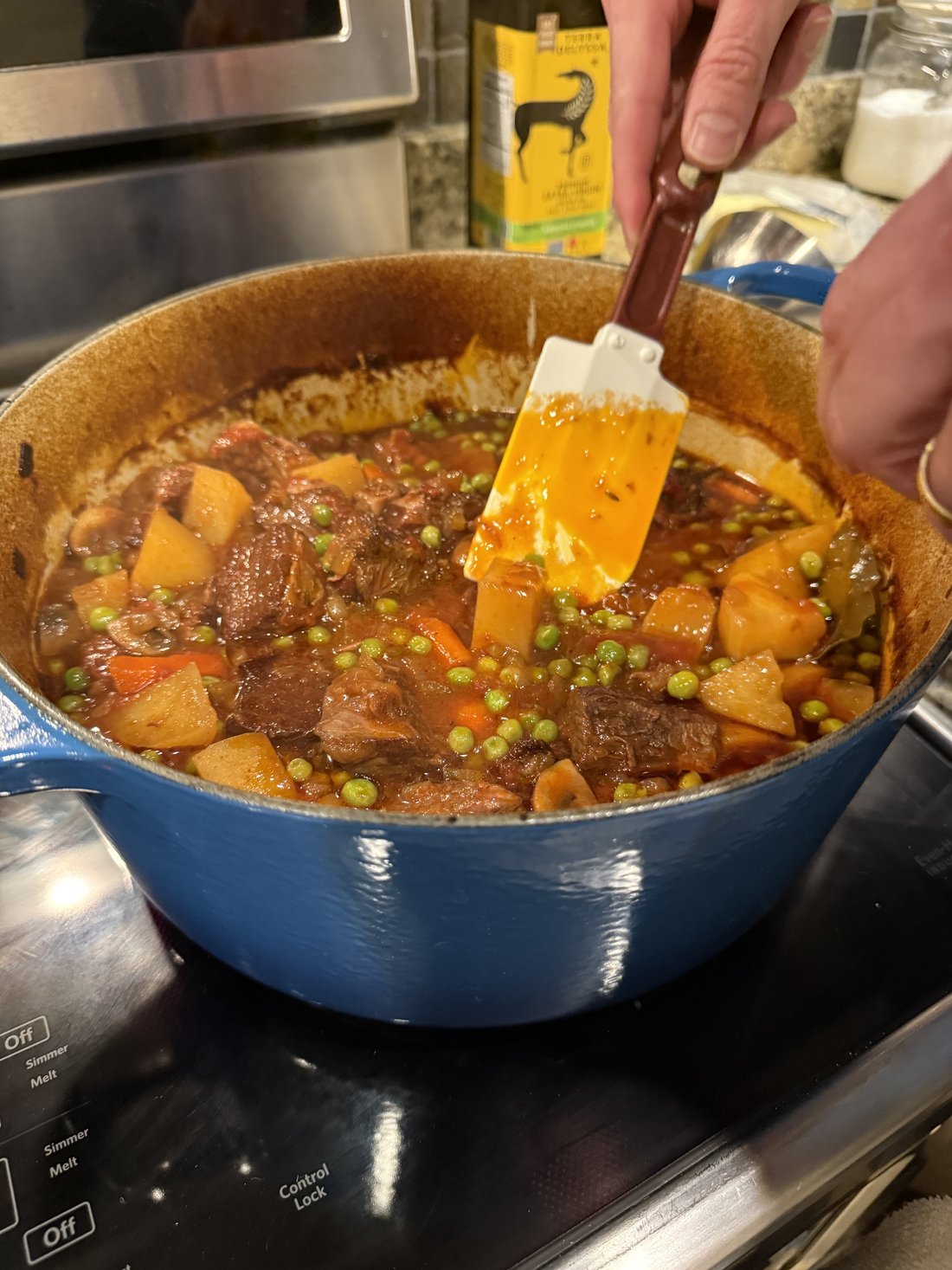
Beef stew served in bowls at the table with crusty bread and butter Beef stew being stirred in a blue Dutch oven on the stovetop