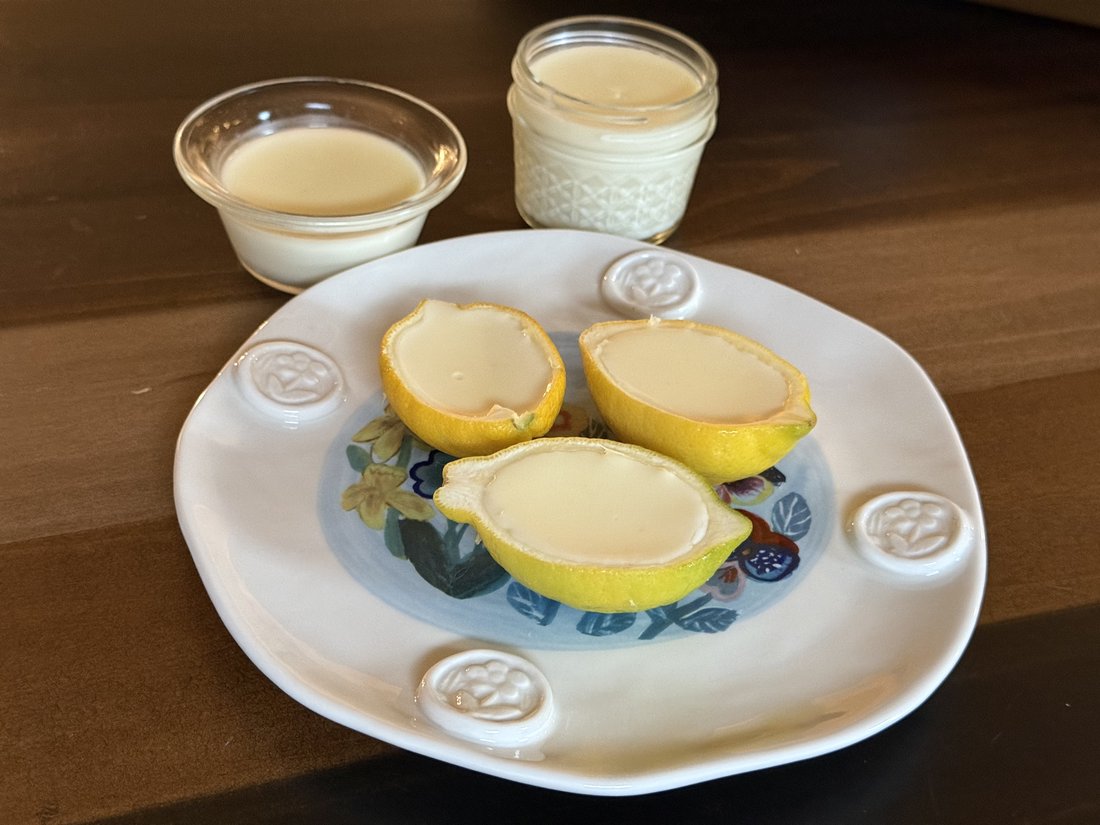
Posset sets by the reaction between citric acid and fat. There is no other thickener in this recipe — no gelatin, no eggs, nothing. Low-fat cream or half-and-half simply does not have enough fat to set, and your posset will never firm up. This is not a place for substitutions.
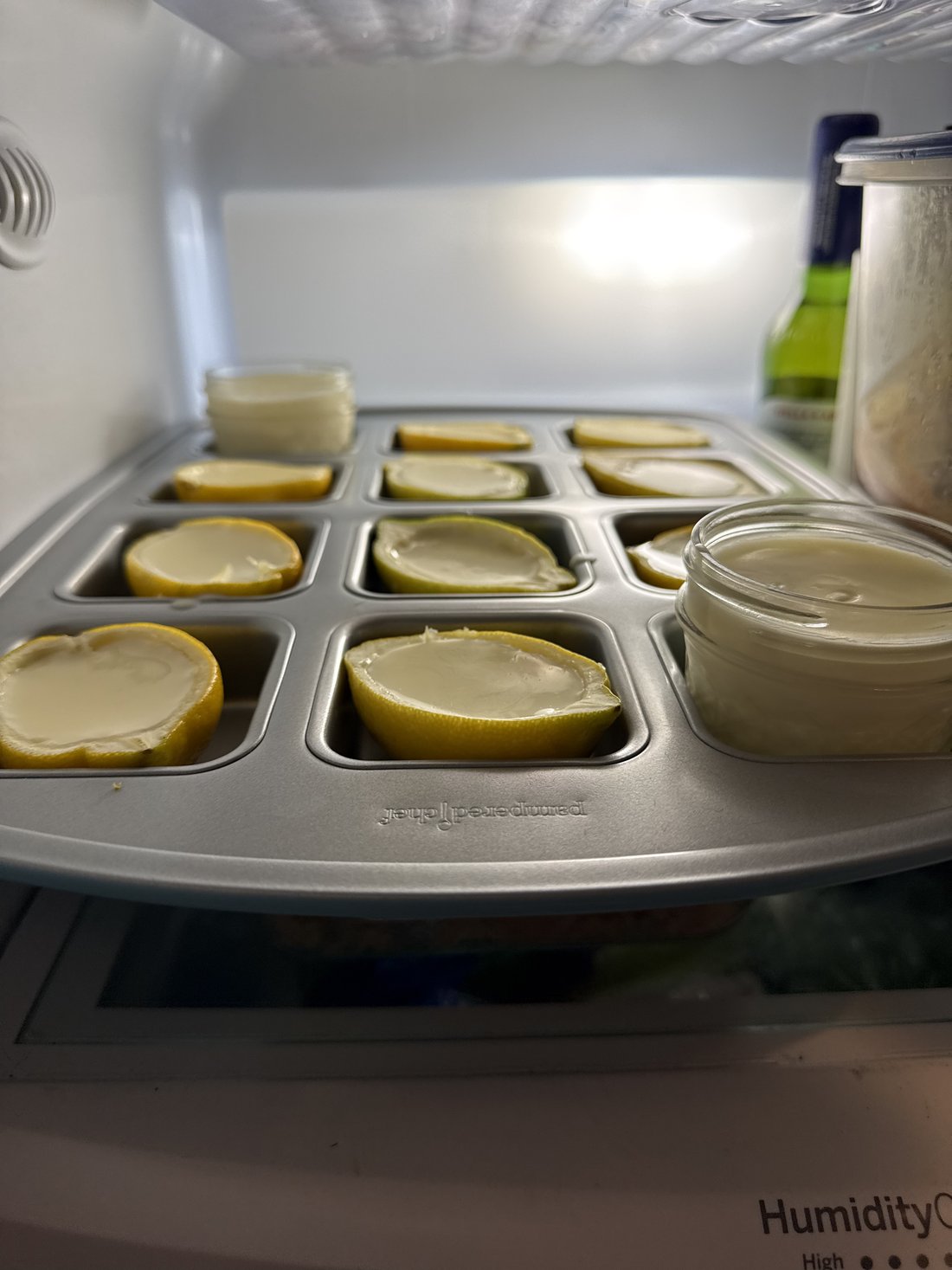
The lemon shell presentation is beautiful and traditional — it will absolutely stop a dinner table. But the shells are shallow, so each serving is small, and the pith can lend a slight bitterness to the bottom of the posset as it sits overnight. The little quilted mason jars give you a fuller, creamier serving with a clean lemon flavor all the way through. We do both, honestly: shells for company, jars for us.
These keep perfectly in the fridge for two days, covered once they’re fully set. Don’t add the mint until just before you serve — it wilts and discolors in the fridge.
If you want to go next-level, look for sfusato amalfitano — the long, knobby, deeply fragrant lemons of the Amalfi Coast. They have a thicker pith (better shells), intensely floral zest, and a juice that is brighter and more complex than anything at a chain grocery. Italian delis and specialty markets sometimes carry them. Worth the detour.
A Brief History
The word posset traces back to medieval England, where it meant something entirely different: a hot, spiced drink made by pouring wine or ale into warm milk and letting it curdle. The curds floated to the top, the warm whey was sipped below, and the whole thing was considered good medicine for colds, sleeplessness, and the general miseries of winter. Shakespeare mentions it in both Hamlet and Macbeth. For centuries, posset meant warm, frothy, and medicinal.
Somewhere in the twentieth century, British cooks noticed something: the same acid-sets-cream chemistry that curdled hot milk could be persuaded, at lower temperatures and with better ingredients, to produce something elegant instead of rustic. By swapping wine for lemon juice, milk for heavy cream, and adding a measured amount of sugar, the posset became something entirely new — silky, cold-set, and startlingly simple. The modern lemon posset as we know it is a distinctly British refinement, perfected on the pages of recipe books by writers like Delia Smith and Nigel Slater.
But here is what those recipe books tend not to mention: the soul of this dish is Italian. The Amalfi Coast has grown sfusato amalfitano — long, knobby, intensely fragrant lemons — for over a thousand years. Campanian cooks have long made crema di limone, a cold lemon-cream dessert served in the hollow of a spent lemon half. In Sicily, there is a whole tradition of serving semifreddo and granita in scooped-out lemon shells — a presentation that the British posset-in-a-shell directly echoes, whether or not the recipe writers knew it. The British codified the recipe; the Amalfi Coast provided the template.
This is not unusual in the history of cooking. Italian technique and ingredient culture spread north through trade and through court kitchens for centuries — lemons themselves arrived in Britain via Mediterranean trade routes. The acid-and-cream reaction was being explored in Italian kitchens long before English cooks gave it a name and a recipe index entry. What is interesting about the posset is that the British kitchen made a genuine contribution: they took an idea floating in European food culture and made it minimal, repeatable, and precise in a way that circled back. You can now find “posset” on menus in upscale restaurants on the Amalfi Coast itself.
For us, putting lemon posset in an Italian American week is the honest call. The creamy lemon dessert is native to both traditions — it shows up at Italian-American Sunday tables as granita, as semifreddo, as a limoncello panna cotta. The posset is just the British name for something the Italians were already doing. And if you find good sfusato lemons, or even Meyer lemons with their perfumed zest, this three-ingredient recipe earns its place alongside anything in the Italian pastry canon. It is elemental — and elegance always finds its way home.