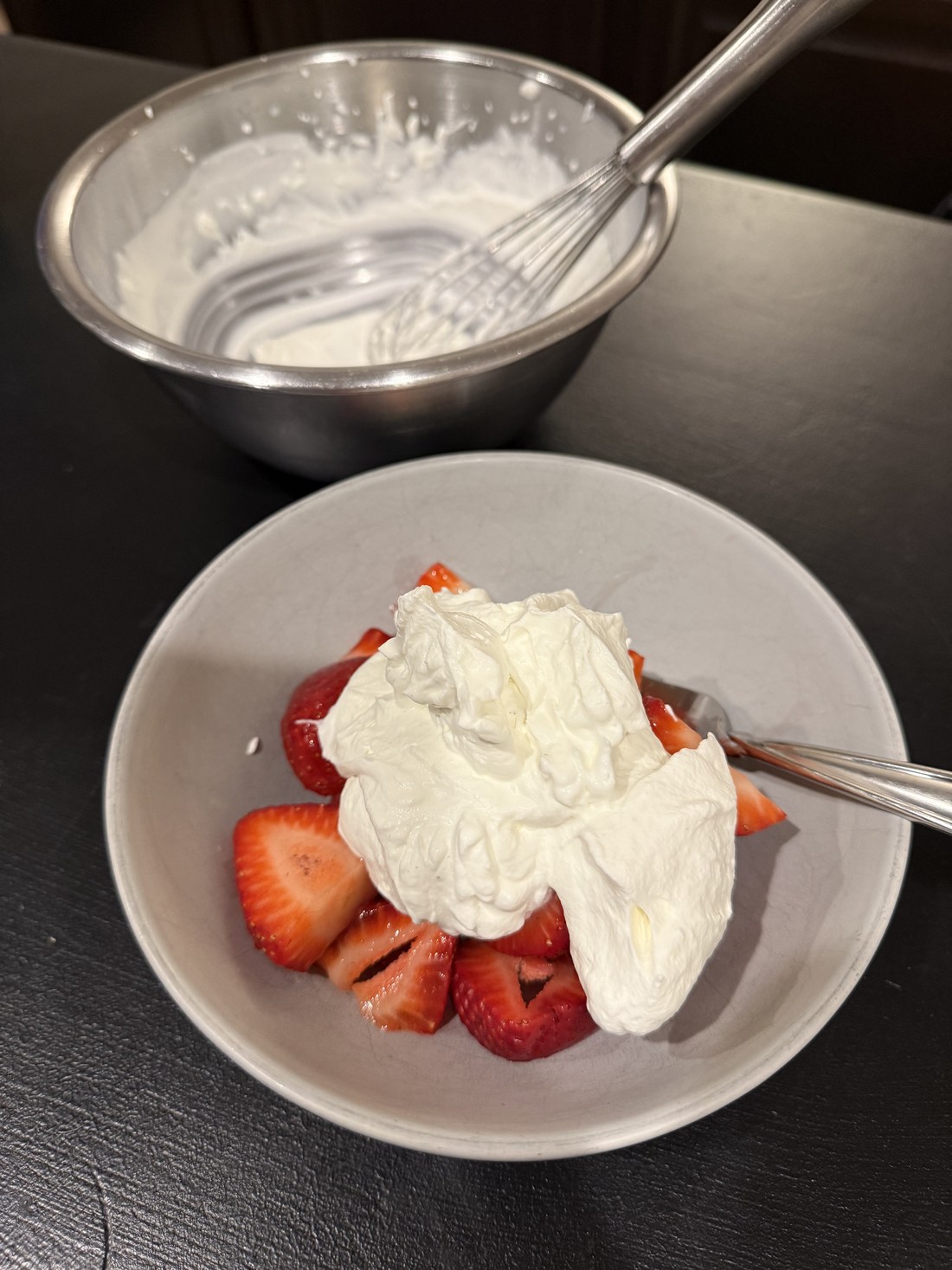
There is no cooking in this dessert at all. You slice a pint of strawberries, put sugar on them, and walk away — the fridge turns them into something else over the next few hours while you make dinner. Start it before the peppers go in the oven and it’s waiting for you when the plates are cleared.
Sugar sitting on cut fruit pulls water out of the cells by osmosis — the sugar outside is more concentrated than the juice inside, so the juice migrates out to meet it. That escaping juice dissolves the sugar it finds, and you end up with syrup in the bowl that you never made and never cooked. The berries go softer, glossier and deeper red in the process. It’s the same principle as salting eggplant, just running toward dessert instead of away from bitterness.
Under an hour and there’s barely any syrup to speak of; the sugar is still sitting on top being sugar. Left overnight the berries keep giving up water until they go limp and washed-out, and the flavor thins along with the texture. Two to three hours is where you get a proper pool of syrup while the slices still have some structure left to them.
Whether you’re using a whisk or a mixer, the cream needs to come straight from the fridge — the fat has to be firm enough to trap air, and cream that’s sat out on the counter simply won’t hold. If you’re going by arm, chilling the bowl and the whisk first makes a real difference to how long you’re standing there.

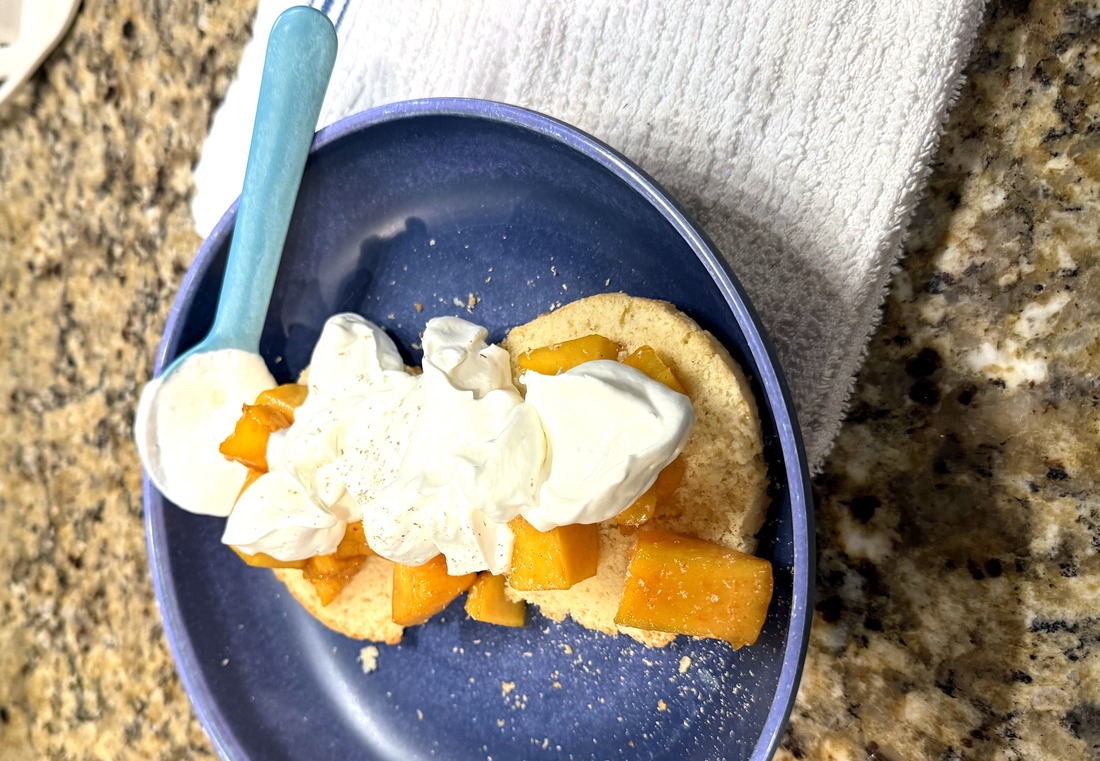
Macerating isn’t a strawberry technique, it’s a fruit technique. Peaches, plums, nectarines, cherries — anything with juice and a little acid behaves the same way with sugar and a couple of hours. Spoon it over gelato, over shortcake, over yogurt at breakfast. A drizzle of balsamic on the berries sounds strange until you try it, and then it doesn’t.