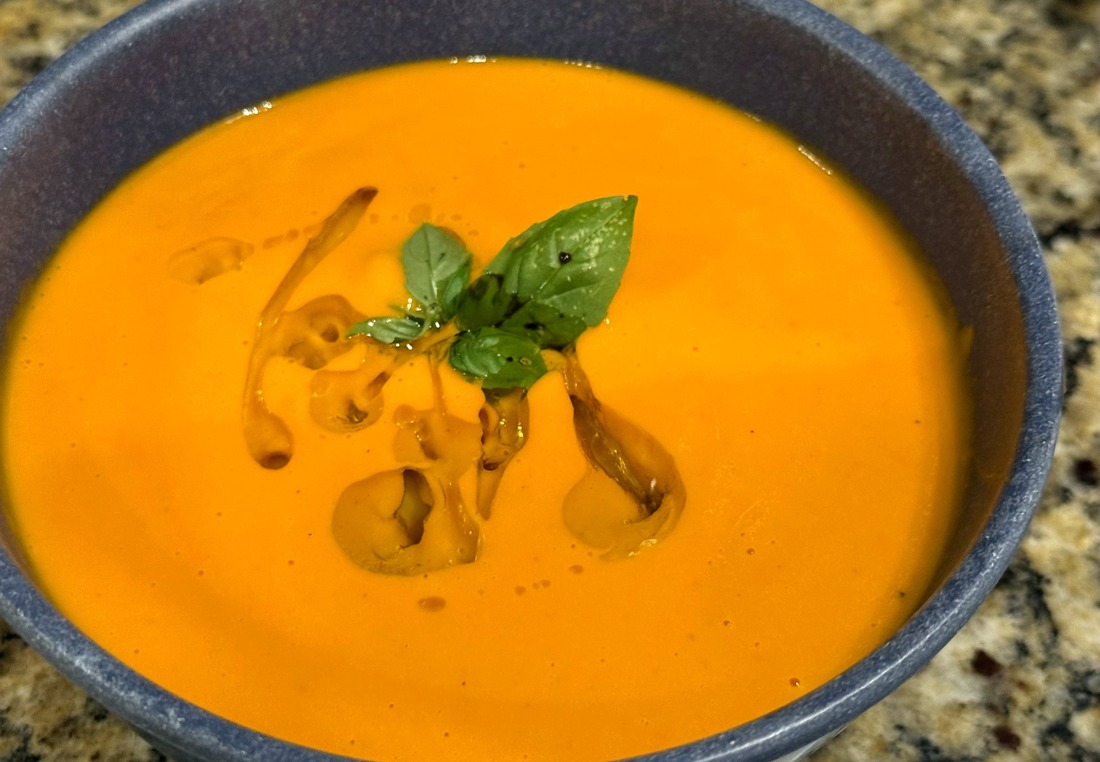
There is no broth in this soup. Every drop of liquid comes out of the tomatoes themselves over forty minutes on the stove, and then the cream. That’s why the flavor lands as concentrated as it does — nothing in the pot is diluting anything else.
This is why the oil and cream are given as ranges instead of numbers. Tomatoes vary wildly in acidity by variety, by season, and by how long they sat on the vine — and a soup with no stock in it has nothing else to buffer them. The batch in the photo came out very acidic and needed the full 2 cups of cream before it turned into a real bisque. A sweeter, riper batch might get there at one. Add the cream a cup at a time, taste, and stop when the sharp edge is gone. Fat is what tames acid; the number on the page can’t know what your tomatoes are doing.
This is the trick worth stealing from this recipe. The first can goes under the blender and vanishes — cannellini are starchy and mild enough to thicken a soup into velvet without announcing themselves, which is how you get a cream-soup texture without a roux. The second can goes in whole, after, so every spoonful still has something to chew. One ingredient, two completely different results, depending on when you add it.
Each one is in there for a reason. Roma brings dense flesh and thickness. Compari brings sweetness with real body. The cherry tomatoes bring concentrated sugar — they’re the reason this never needs a pinch of sugar to correct the acid. And the canned San Marzanos bring the deep, cooked-down backbone that fresh tomatoes alone can’t give you in forty minutes. Use only fresh and it tastes thin; use only canned and it tastes like winter.
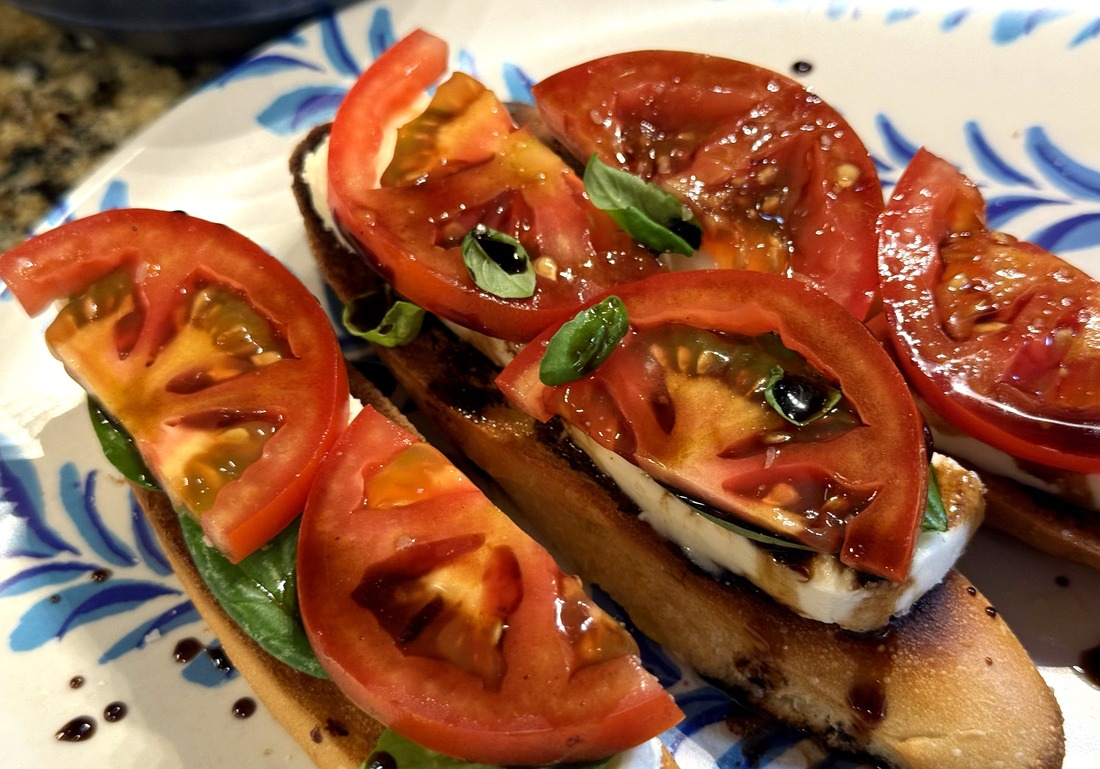
The night we made this, there was enough left over from Week 4 to put bruschetta caprese on the table beside it — and it turned out to be the right call. A stockless tomato soup this rich wants something crisp to break it up, and toasted bread is exactly the thing to push through the last of the beans at the bottom of the bowl. If you have tomatoes, basil and a baguette going soft, that’s the side.
If you canned stewed tomatoes last season, this is the soup to open them for. Swap them straight in for the 28 oz can. A soup with no stock in it lives or dies on the tomatoes, so the better the jar, the better the pot — and it clears shelf space before the new season comes in.