Sunday Forward — Mexican & Latin · Week 2
Flan with Rich Caramel Sauce
Silky custard · heavy syrup caramel · water bath · unmold the day before
DessertMake-AheadWater Bath
8
Servings
~50 min
Bake
4+ hr
Chill
Medium
Difficulty
Custard
Condensed
Sweetened Condensed Milk
14 oz can — the sweetness and body of the custard
1 can
Evaporated
Evaporated Milk
12 oz can — classic flan base
1 can
Eggs
Large Eggs
Whole eggs — no extra yolks
5 large
Caramel
Sugar
Granulated Sugar
For the caramel; cooked with water and cream of tartar until rich amber
1½ cups
Water
Water
Helps the sugar dissolve evenly before caramelizing
4 tbsp
Stabilizer
Cream of Tartar
Prevents crystallization — keeps the caramel smooth and pourable
¼ heaping tsp
Method
0 of 7 steps complete — click a step to check it off
1Prep
Preheat & Prep Your Pans
Preheat the oven to 325°F. Get out your three pans: the 9-inch round cake pan (this is your flan pan), a roasting pan large enough to hold it for the water bath, and a flat-bottomed saucepan for the caramel. Lightly butter or spray the 9-inch cake pan and set it on a heatproof surface — this greased pan is where the caramel goes first, then the custard on top. Bring a kettle of water to a boil for the water bath.
✓
2Caramel
Start the Caramel
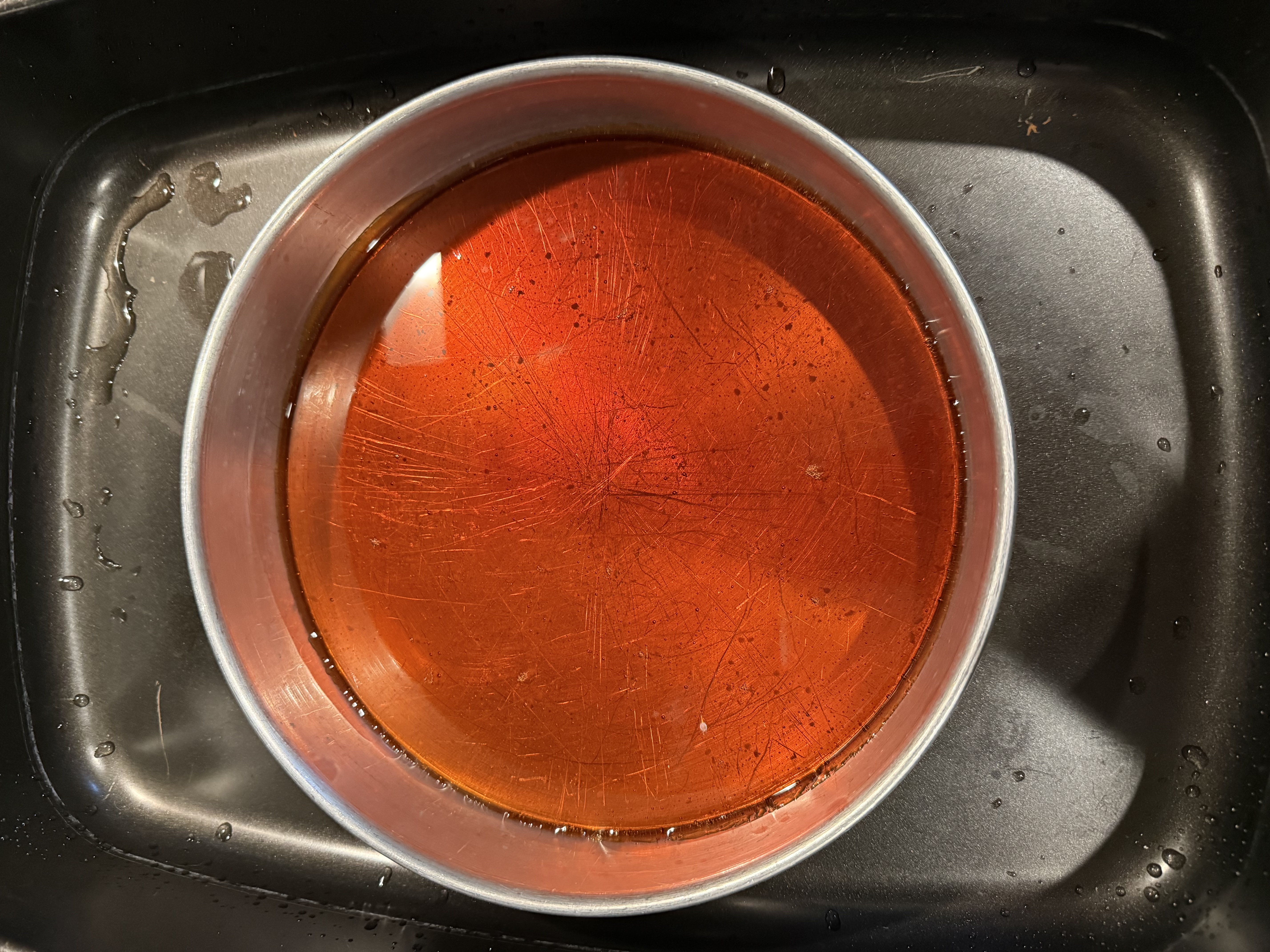
In your flat-bottomed saucepan, mix the sugar dry with the cream of tartar — just enough to distribute it throughout. Pour the 4 tablespoons of water around the outside edge of the pan in a circle; this helps prevent crystallization from the start. Heat on medium-high and watch carefully, swirling the pan rather than stirring. The sugar will dissolve, then begin to bubble and color — cook it to the heavy syrup stage: rich golden, thick but still pourable.
▶ See the video on caramel
▶ See the video on caramel
✓
3Custard
Make the Custard & Strain
While the caramel cooks, make the custard. Whisk the condensed milk, evaporated milk, crème fraîche (or sour cream), and eggs together in a bowl until smooth. Pour through a fine-mesh strainer into a large measuring cup or bowl and set aside — straining removes any gummy egg bits and is what gives the custard its rich, smooth finish and mouthfeel.
✓
4Fill Pan
Coat the Pan, Then Add the Custard
Once the caramel reaches the heavy syrup stage, immediately pour it into the greased 9-inch cake pan and tilt to coat the entire bottom in an even layer. At the heavy syrup stage the caramel stays fluid longer than a hard crack, so you have a little more time — but still work steadily. Then pour the strained custard right on top of the caramel.
✓
5Water Bath
Cover & Set Up the Water Bath
Cover the greased 9-inch flan pan tightly with foil. Place it in the roasting pan and slide it partway into the oven, then pour the boiling water into the roasting pan until it comes halfway up the sides of the flan pan. Carefully push fully into the oven.
✓
6Bake
Bake Until Set with a Gentle Jiggle
Bake at 325°F for 45–55 minutes. The flan is done when the edges are set and the center jiggles like Jell-O — not sloshy, not firm. Carefully remove from the oven and cool the flan in the water bath for 30 minutes, then remove the flan from the bath and let it cool until it reaches room temperature, up to another hour.
✓
7Chill & Unmold
Refrigerate, Then Unmold
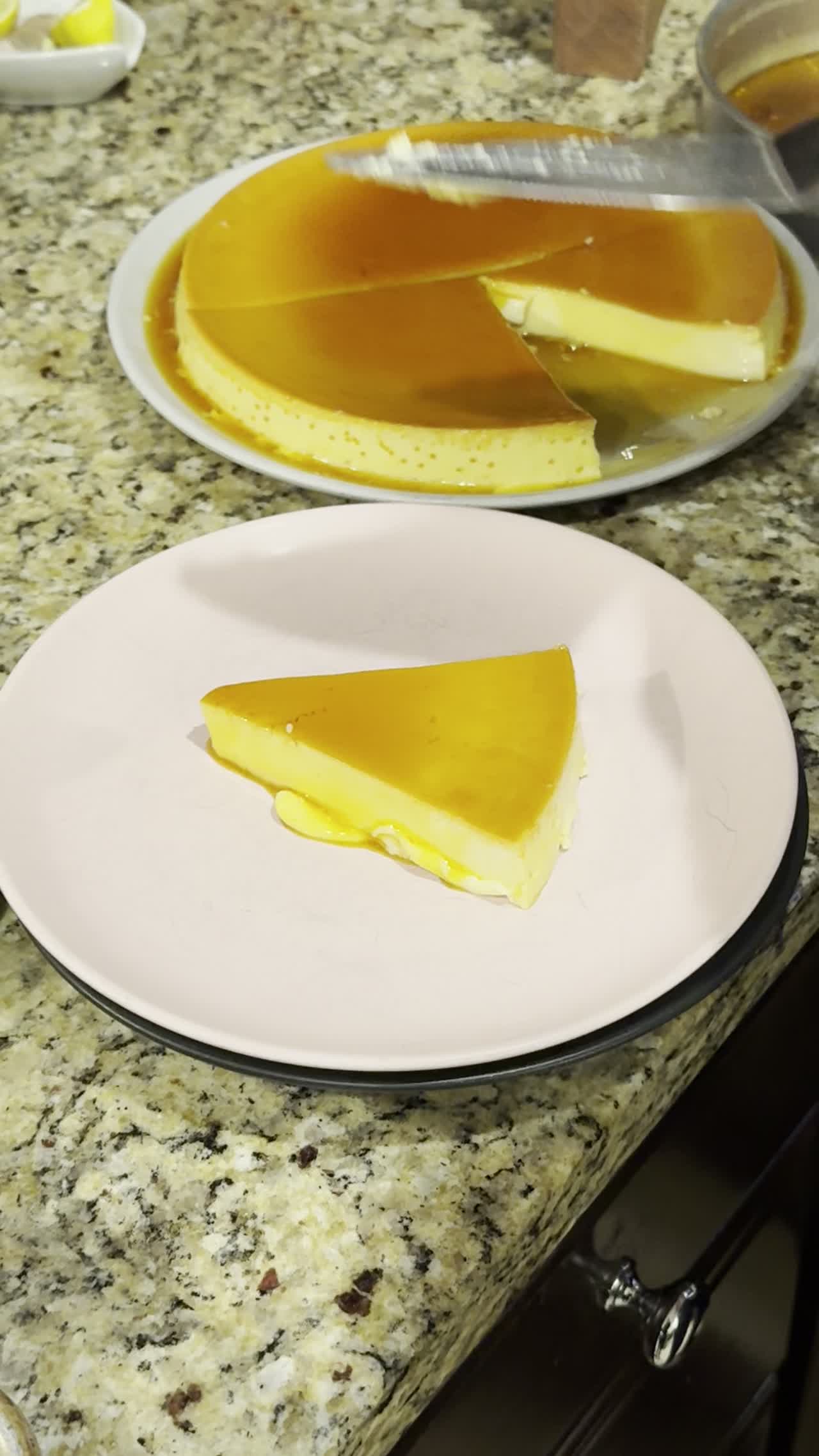
Cover and refrigerate at least 4 hours, overnight preferred. To unmold: run a thin knife around the edge, place a rimmed plate face-down over the pan, and flip in one confident motion. The caramel will cascade over the top. Slice and serve cold.
✓
Heavy Syrup, Not Hard Crack
You want the caramel at the heavy syrup stage — rich golden, thick but pourable. Don’t take it to deep amber or hard crack; stopping earlier gives you a fluid caramel sauce that pools beautifully when you unmold, rather than a brittle shell.
Make it the Night Before
Flan is almost always better the next day. Overnight chilling sets the texture and deepens the caramel flavor. It's the rare recipe where waiting is objectively correct.
Don't Skip the Strainer
Straining takes 30 seconds and is the single biggest upgrade you can make. It catches cooked egg bits and air bubbles that would otherwise show up as texture in the finished custard.